
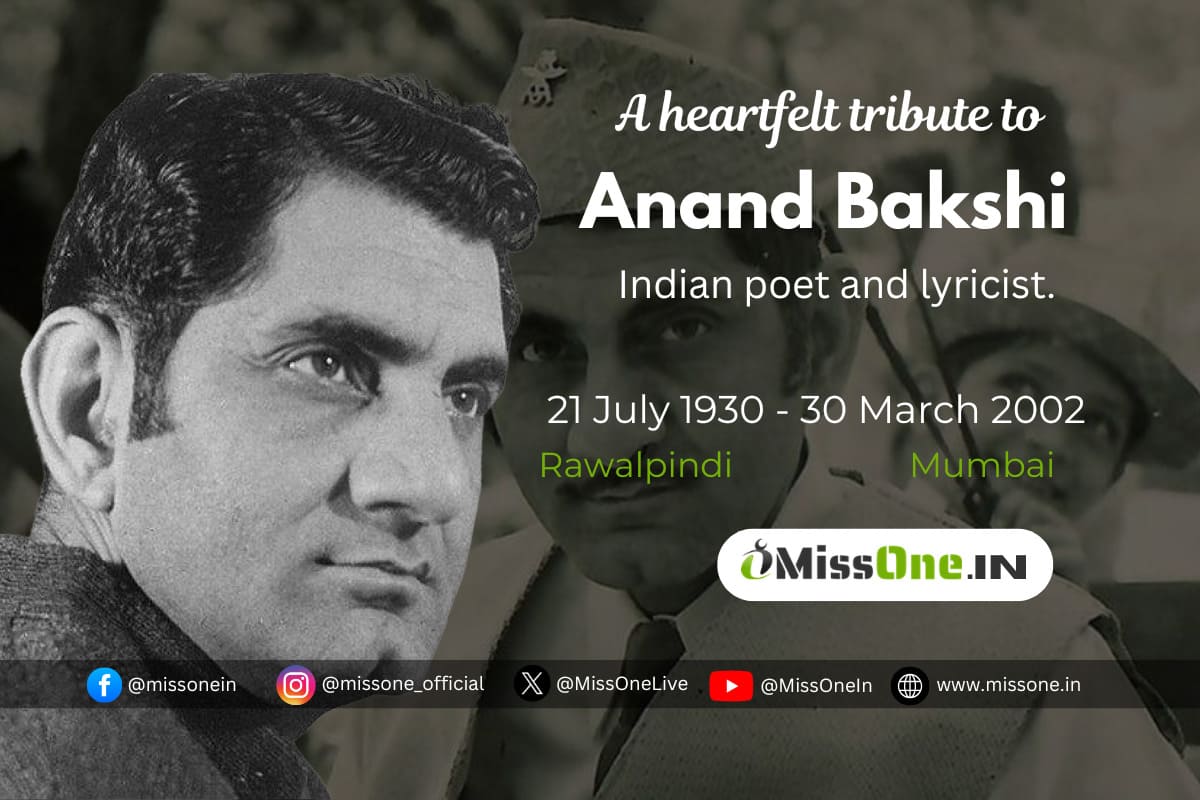
Writing about the life of Anand Bakshi feels like opening a great old notebook of Indian film memories. Every page holds a melody, a rising verse, and a moment that millions of people carry in their hearts. On this Anand Bakshi death anniversary, we look back at the boy from Rawalpindi who became Bollywood’s most loved lyricist, lived a life full of struggle and song, and left behind an unforgettable musical legacy.
A Simple Beginning: Anand Bakshi’s Childhood and Dreams
Anand Bakshi was born as Bakshi Anand Prakash Vaid on 21 July 1930 in Rawalpindi, then part of British India’s Punjab province (now in Pakistan). His early years were marked by simplicity and loss. Both his family roots and his early life were shaped by the rhythms of everyday life and a deep love for words.
He was very young when he started writing poetry just for pleasure, not for fame. Even as a boy, he loved reading, dreaming, and standing in line at cinemas just to watch songs on screen. His imagination was fuelled by the way songs could touch hearts and tell a story.
After the Partition of India in 1947, Anand’s family moved to Delhi in search of safety, shelter, and new beginnings. Life was not easy new place, new language influences, and more responsibilities for the young Anand. But he would never let go of his love for writing.
The Young Poet’s Struggle: From Navy Life to Mumbai’s Dream
At the age of 14, Anand joined the Royal Indian Navy, hoping that the discipline and travel would help shape his future. But inside him, another journey was growing — the desire to write songs that could speak to people’s feelings. Even while serving, he wrote whenever he could, keeping that spark of creativity alive.
However, it wasn’t long before fate nudged him toward the world of film lyrics. After brief stints in the Navy and Army, and with a heart full of poetry, Anand left for Bombay (now Mumbai) the city of dreams — intent on making it big as a songwriter or singer. His hope was simple: to write words that people would sing again and again.
The early years in Bombay were full of struggle. Anand had to face rejection and doubt, not just from the industry, but even from his own thoughts. He once said that he had no formal training in writing songs yet, he had faith in his own feelings and the ability of simple words to touch hearts.
Family Life: Marriage and Support
While Anand was still chasing his dream in Bombay, he got married to his loving wife, Kamla Mohan Bakshi. Together they built a family that supported him through thick and thin. They had four children — two daughters, Suman Datt and Kavita Bali, and two sons, Rajesh Bakshi and Rakesh Bakshi — who grew up watching their father’s passion for music and writing.
His family was often his anchor. When the early years were difficult, it was Kamla who stood by him. When he slept late nights writing lyrics and mornings were spent attending studios, his children saw their father pour his heart into words long before anyone knew his name.
From Struggle to Spotlight: Anand Bakshi’s Big Break
Anand’s first real opportunity came in the late 1950s. A small film called Bhala Aadmi (1958) gave him his first break — four songs — and although it wasn’t an instant sensation, it showed that his talent was waiting for a stage.
But it was 1962 when he started getting noticed with songs in films like Mehendi Lagi Mere Haath and performances that hinted at his potential. Soon after, movies like Himalay Ki God Mein, Jab Jab Phool Khile, and Milan gave his words a wider presence. Suddenly, the world began to listen.
Anand soon became the first choice for lyricists, working with top music directors like Laxmikant‑Pyarelal, R.D. Burman, Kalyanji‑Anandji, Anand‑Milind, and others. His words began to fill screens and speakers, carrying emotions that ranged from love and loss to joy and hope.
An Effortless Pen: Anand Bakshi’s Career and Song Legacy
What made Anand’s writing special was its simplicity. He could express deep emotions in plain words that any listener could understand and sing. This is why his songs became part of everyday life — wedding celebrations, rainy evenings, heartaches, and festive moments alike.
A Prolific Career
Anand Bakshi wrote lyrics for more than 6,000 songs across over 300 films, spanning from the late 1950s into the early 2000s — more than four decades of creativity.
Some eras of his career include:
- The golden era of 60s and 70s, with romantic and soulful classics.
- The ‘80s and ‘90s, when Indian movies grew even more musical.
- The late 90s and 2000s, where he wrote for hits like Dilwale Dulhania Le Jayenge, Pardes, Mohra, Taal, Mohabbatein, and Gadar: Ek Prem Katha.
Musical Versatility
From playful duets to deep romantic ballads, from spiritual verses to patriotic hymns, Anand could write it all. Songs like “Dum Maro Dum”, “Tujhe Dekha Toh Yeh Jaana Sanam”, “Chingari Koi Bhadke”, “Yaadein”, and “Saawan Ka Mahina” remain timeless.
And even though he was known for writing, he also lent his own voice as a singer in a few films — a dream he had since childhood.
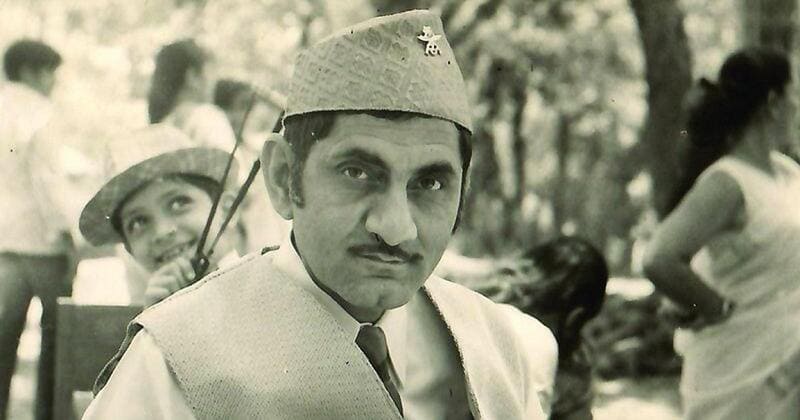
Awards, Recognition, and Cultural Impact
Anand Bakshi’s talent did not go unnoticed. He won the Filmfare Award for Best Lyricist four times — in 1978, 1981, 1995, and 1999 — honoring his remarkable contribution.
Besides awards, the real homage was how his songs became part of people’s lives. On his Anand Bakshi birth anniversary, fans, artists, and musicians remember his words, celebrating him with tribute shows, social media posts, and reinterpretations of his songs.
Even years after he passed away, people still talk about his ability to capture everyday emotions in captivating lines — making love, longing, and hope feel beautifully simple.
Love, Loss, and the Later Chapters
As his career flourished, life outside the studio had its ups and downs too. His children grew up, sometimes touring with him, sometimes figuring out their own paths. His wife Kamla’s unwavering support helped him balance family life and artistic pressure.
And yet, even as the spotlight moved to newer voices over time, Anand continued writing. His passion never dimmed. His pen seemed to flow freely until his final years.
Anand Bakshi Death: A Loss Felt Across Generations
The world observed Anand Bakshi death on 30 March 2002, when he passed away at the age of 71 after struggles with health issues, including heart and lung problems. He was in Mumbai’s Nanavati Hospital when he suffered a bacterial infection and multiple organ failure.
This date — 30 March — later became a solemn moment for fans and the film industry. Every year on the Anand Bakshi death anniversary, people remember him not with sadness but with gratitude — remembering the man who gave voice to love, loss, laughter, and life.
Hit Films That Carried His Words
Anand’s touch was not limited to just songs — his work helped shape some of the most beloved Bollywood films. These movies are remembered not only for their stories but for how their songs became inseparable from the soul of the film:
- Bobby – Youthful romance with melodies that defined an era.
- Aradhana (1969) ** – Romantic gems that are still sung today.
- Sholay (1975)** – A cult classic with memorable music.
- Dilwale Dulhania Le Jayenge (1995)** – A defining love story of Indian cinema.
- Taal (1999)** and ** Mohabbatein (2000)** – Songs that bridged generations.
In each film, his words carried emotion that many viewers felt connected to — whether it was first love, heartache, celebration, or longing.
Famous Songs That Live On
Anand’s lyrics turned into songs that are still hummed, whistled, and shared. A few evergreen favorites include:
- Tujhe Dekha Toh Yeh Jaana Sanam — love that feels timeless.
- Yaadein — a song of memories that captures nostalgia.
- Saawan Ka Mahina — a romantic hymn for rainy days.
- Dum Maro Dum — youthful energy and cultural vibe.
- Chingari Koi Bhadke — deep feelings made musical.
These words are woven into the soundtrack of millions, reminding us that simple language can express the deepest emotions.
An Enduring Inspiration: Legacy and Lessons
Today, on every Anand Bakshi birth anniversary and Anand Bakshi death anniversary, people remember him not just as a lyricist but as someone who spoke to the common heart with uncommon simplicity.
He taught us:
- That ordinary words can create extraordinary feelings.
- That persistence can turn struggle into success.
- That songs are more than melodies — they are feelings given wings.
His career — spanning over four decades — is a lesson in patience and passion. And for poets, writers, musicians, and film lovers, Anand Bakshi remains a source of inspiration.
Final Thoughts: Tribute to Anand Bakshi on This Special Day
As we remember Anand Bakshi on this Anand Bakshi death anniversary, we celebrate the simple beauty of his words that still live in our hearts. His journey from a young dreamer writing poems to the lyricist who helped define generations of Indian film music is a story of belief, resilience, and love for art.
On this day every year, millions of people pay their tribute to Anand Bakshi — sharing his songs, humming his melodies, and thanking him for giving Bollywood some of its most beautiful lines.
In the end, Anand Bakshi did something few artists achieve — he turned feelings into songs, and songs into lifelong memories.